.webp)
Final Fantasy: The Timeless Conflict Between Narrative Innovation and Gameplay Tradition
Few franchises in gaming history have endured as long—or evolved as boldly—as Final Fantasy. Across decades, Square Enix’s flagship series has reinvented itself repeatedly, from pixel-based turn-based battles to fully cinematic action RPGs. Yet beneath this success lies a persistent creative tension: how to honor the classic role-playing roots that built the franchise while embracing innovation that keeps it alive for modern audiences.
This article dives deeply into this core issue—the struggle to balance narrative evolution with gameplay tradition—tracing how Final Fantasy has navigated technological leaps, player expectations, and its own legacy across generations.
1. The Birth of a Legend
In 1987, the first Final Fantasy was created by Hironobu Sakaguchi and a small Square team as a last-ditch effort to save the company. Its success launched one of gaming’s most influential franchises. The original’s turn-based combat, simple story, and sense of adventure defined what a Japanese RPG could be.
But even at its inception, Final Fantasy wasn’t afraid to change. Each new title reinvented its world, characters, and systems. No numbered game was a direct sequel; instead, they shared ideas—magic, summons, and morality—while exploring new mechanics. That willingness to evolve became the franchise’s signature strength and biggest creative risk.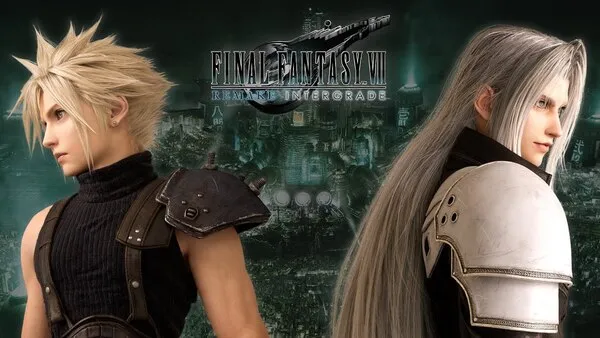
2. The Golden Era: When Story and System Merged
The 1990s, particularly Final Fantasy IV through IX, represent what many fans consider the golden age. These games perfected the Active Time Battle (ATB) system, blending real-time urgency with turn-based strategy.
What made these titles legendary wasn’t just gameplay—it was storytelling. Final Fantasy VI’s opera sequence, VII’s emotional twists, and IX’s nostalgic charm turned simple RPGs into cinematic experiences.
Yet, even in their mastery, seeds of tension began to sprout. Players adored the depth of turn-based systems, but technology was racing forward. 3D graphics and real-time gameplay were becoming the future, forcing Final Fantasy to decide between tradition and transformation.
3. The Leap to Realism: Final Fantasy X and Beyond
Final Fantasy X marked a turning point. Full voice acting, 3D environments, and emotional motion capture redefined narrative immersion. Tidus and Yuna’s story of love and sacrifice became iconic, but so did the game’s linearity—a departure from the open exploration of earlier entries.
While some players praised the cinematic focus, others missed the freedom of past titles. The same divide would later echo louder in the franchise’s future.
At its heart, FFX was a statement: story mattered more than map size. The series was becoming a narrative-driven experience, even if it meant leaving some traditional RPG systems behind.
4. The MMO Experiment: A Risk That Reshaped the Franchise
When Final Fantasy XI launched as an MMORPG in 2002, it shocked fans. Could a series built on single-player storytelling succeed in an online world?
The answer was yes—but not easily. FFXI pioneered a shared universe that emphasized cooperation and persistence. It taught Square Enix the importance of community-driven storytelling, a lesson that would later define Final Fantasy XIV.
The success of XIV: A Realm Reborn after its disastrous 1.0 launch stands as one of gaming’s greatest redemption stories. Under Naoki Yoshida’s direction, it became a symbol of how innovation, humility, and collaboration can revive even the most broken systems.
5. The Action RPG Revolution
With Final Fantasy XV, the franchise took its boldest leap yet—fully embracing real-time combat. No more waiting for ATB gauges; players controlled Noctis directly in dynamic, cinematic battles.
The shift divided fans. Some loved the fluid, action-heavy approach; others felt it stripped away the tactical depth that defined earlier games. The narrative, ambitious but uneven, struggled under development turmoil.
Still, XV marked an evolution of design philosophy: modern audiences demanded immediacy and spectacle. Square Enix was no longer designing just RPGs—it was crafting emotional blockbusters.
6. Final Fantasy XVI: Tradition Meets Modern Cinematic Design
Final Fantasy XVI took this direction further, merging character-driven storytelling with combat reminiscent of Devil May Cry. Fast, visceral, and visually stunning, it reimagined what a fantasy RPG could look like in the 2020s.
Yet again, controversy followed. The absence of traditional party systems and limited exploration made some long-time fans feel alienated. Critics argued that XVI played more like an action game than an RPG.
This ongoing debate highlights the franchise’s identity crisis: can Final Fantasy evolve into modern cinematic form without losing its RPG soul?
7. The Art of Reinvention: Remakes and Reinterpretations
While new entries push forward, Square Enix has also looked backward. The Final Fantasy VII Remake project perfectly encapsulates the franchise’s balancing act—preserving nostalgia while reinventing gameplay and narrative structure.
Rather than a straightforward remake, it’s a reimagining that expands character arcs, redefines combat, and even alters the original story’s meaning. This bold reinterpretation divides fans but also keeps the franchise culturally alive.
The message is clear: Final Fantasy isn’t about preserving the past—it’s about conversing with it.
8. The Power of Music and Emotion
One of Final Fantasy’s most consistent strengths has always been its music. From Nobuo Uematsu’s orchestral epics to Masayoshi Soken’s modern compositions, the soundtrack serves as the emotional anchor for each game’s identity.
Themes like “To Zanarkand” or “Aerith’s Theme” transcend gameplay—they define the emotional landscape. This consistency anchors fans even as gameplay systems evolve.
The music bridges generations, reminding players that no matter how much Final Fantasy changes, its heart beats in melody and emotion.
9. Community, Modding, and Fan Expectations
The Final Fantasy community plays a massive role in shaping the series’ direction. Fan reactions often guide development priorities. FFXIV’s continued success stems from its transparent dialogue with players, while FFVII Remake’s narrative twists directly respond to decades of fan theories.
Modding and social media further amplify engagement. From cosplay and fan art to debates over canon, Final Fantasy thrives not only as a series but as a cultural movement.
Yet this relationship is double-edged. Fans’ expectations can limit experimentation, forcing Square Enix to walk a fine line between honoring legacy and daring to disrupt it.
10. Conclusion: The Crystal That Never Shatters
Across generations, Final Fantasy has always been about transformation. From turn-based roots to cinematic storytelling, from pixel sprites to photorealistic heroes, it continues to evolve while wrestling with its own identity.
The tension between innovation and tradition isn’t a flaw—it’s the series’ lifeblood. Every game, whether universally loved or fiercely debated, pushes the boundaries of what an RPG can be.
Perhaps that’s the true spirit of Final Fantasy: not perfection, but reinvention. As long as the series dares to evolve, its legacy—like the crystal it so often celebrates—will never truly fade.